Family Planning
Family planning helps people choose if they want children, when to have them, and how many to have. It includes the use of birth control, and access to accurate information and health care services. In Newfoundland and Labrador, you can get family planning care from doctors, nurse practitioners, pharmacists, and community clinics. Accessing family planning care is private and confidential.
Contraception
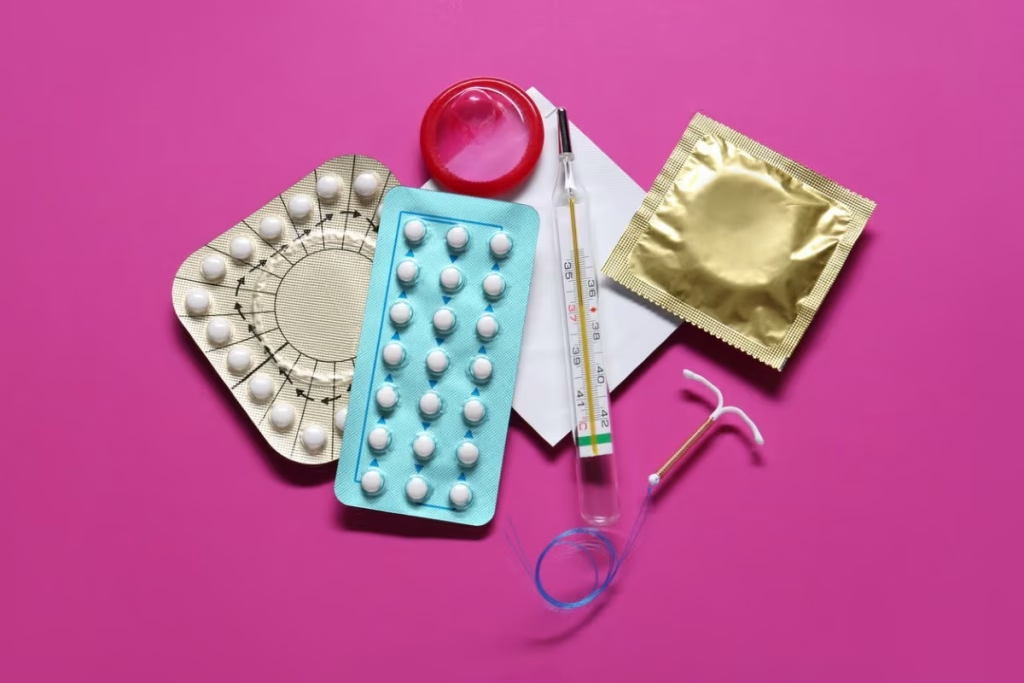
Contraception means using methods to prevent an unplanned pregnancy. These methods can include hormonal and non-hormonal methods, emergency, and permanent methods. They work in different ways, such as stopping fertilization, blocking sperm from reaching an egg, or preventing a fertilized egg from attaching to the uterus. When choosing a method, it is important to consider how well it works, safety, cost, access, and personal preference. There are many options, including temporary (reversible) and permanent methods. The World Health Organization (WHO) states that approved methods are carefully tested and are safe for most people. The best option depends on a person’s health, needs, and preferences, and a healthcare provider can help you choose the right one. In NL, many contraceptive options are available through pharmacies, clinics, and healthcare providers. For contraception and family planning support, you can contact your local Public Health Nurse.
Hormonal methods
Hormonal methods use hormones to help prevent pregnancy. They may stop the body from releasing an egg and make it harder for a sperm to reach an egg. These methods do not protect against sexually transmitted infections and blood-borne infections (STBBIs). Condoms should be used to prevent the risk of STBBIs. These methods are reversible. This means you can stop or remove them if you want to get pregnant later.
Birth Control Pills
Oral contraceptives or Birth control pills are hormonal medications you take every day to help prevent pregnancy. In Canada, you need a prescription from a doctor, nurse practitioner, or sexual health clinic. When used the right way, the pill works very well. There are two main types: pills which contain two hormones, and pills with one hormone. A health care provider can help you choose the best type for you.
Key considerations;
- The pill may take up to 7 days to start working. Use another birth control method during this time.
- Take the pill at about the same time every day.
- If you miss pills or take them late, the chance of pregnancy goes up.
- If you miss a pill, take it as soon as you remember. You may also need condoms or another backup method.
Some people have mild side effects. These often get better with time. If side effects do not go away or bother you, talk to a health care provider.
The side effects include;
- changes in period
- Nausea
- Headaches
- breast tenderness
Hormonal IUD
A hormonal intrauterine device (IUD) is a small, flexible device put inside the uterus by a health care provider. It has one hormone called progestin. It works very well to prevent pregnancy and can last about 3 to 8 years, depending on the type.
Key considerations;
- You need a prescription from a doctor or nurse practitioner.
- It must be inserted in a clinic by a trained healthcare provider.
- Once inserted, it works continuously without needing any daily action
- Your periods may become lighter, shorter, less painful, or may stop while you use it.
- Putting it in can feel uncomfortable or painful.
- You may have side effects
Side effects include;
- Cramping or back aches for a few days after the IUD has been inserted.
- Spotting between periods
- Irregular periods
These side effects often go away in 3 to 6 months, after your body gets used to the IUD. Not everyone has side effects.
Implant
A birth control implant is a small, flexible rod placed under the skin of the upper arm by a health care provider. It can prevent pregnancy for up to 3 years, depending on the type.
Key considerations;
- It requires a prescription from a doctor or nurse practitioner.
- It is over 99% effective at preventing pregnancy.
- It is very low maintenance – it works continuously without needing any daily or monthly action.
- It can stay in place for up to 5 years.
- Depending on when it is inserted, backup contraception such as condoms may be needed for the first week after placement.
- If there are signs of infection, unusual pain, or possible pregnancy after insertion, a healthcare provider should be contacted.
Injectable contraceptive
The birth control injection also known as Depo-Provera is a prescription-only hormonal contraceptive. A health care provider gives the shot in the upper arm or buttocks. You usually get it every 3 months to help prevent pregnancy.
Key considerations;
- It is time-sensitive; it is important to get each injection on schedule every 12 – 13 weeks.
- If an injection is late or missed, pregnancy protection may decrease, and additional contraception or pregnancy testing may be needed if there has been unprotected sex.
- If the first injection is given within the first 7 days of a menstrual period, it works right away.
- If it is given at another time, backup contraception such as condoms is needed for the first 7 days after the injection.
- After stopping the injection, it may take several months for fertility to return.
- Some people may experience side effects, which are usually mild and may improve over time.
The most common side effects include;
- changes in menstrual periods (such as irregular bleeding or no periods)
- Headaches
- Bloating
- weight changes
- Mood changes
If side effects are bothersome or do not go away, a healthcare provider can help discuss other options.
Non-hormonal methods
Non-hormonal methods do not use hormones. They help prevent pregnancy by blocking sperm, stopping sperm, or keeping sperm and egg from meeting.
Condoms
Condoms are thin covers used during sex. External condoms go on the penis. Internal condoms can go inside the vagina. Condoms help prevent pregnancy by stopping sperm from entering the vagina. They are the only birth control method that also helps protect against STBBIs, including HIV.
Key considerations
- For people with latex allergies, non-latex condoms are available and are equally effective in preventing pregnancy and STBBIs.
- Condoms can be purchased without a prescription at pharmacies, grocery stores, and convenience stores.
- They may be available for free at some clinics
- Check the expiry date before use
- Never fold them
- Store them at room temperature away from direct sunlight
- A person’s penis must be erect in order to put an external condom on.
- Use a new condom every time you have sex and never reuse one.
- Follow the instructions on the package carefully.
- Avoid using teeth, scissors, fingernails or anything sharp to open the packaging.
- Using water-based or silicone-based lubricant can help prevent breakage.
- Do not use two condoms at the same time, as friction between them can cause tearing or slipping.
Copper IUDs
A copper IUD is a small device with no hormones. A health care provider puts it inside the uterus to prevent pregnancy. It can work for 10 to 12 years. It can also be used as emergency contraception if it is put in within 5 days after unprotected sex.
Key considerations
- It is a prescription-only form of birth control, meaning it must be prescribed by a doctor or nurse practitioner
- It is inserted in a clinic by a trained healthcare provider.
- The insertion process can feel invasive and painful.
- Once inserted, it works continuously without needing any daily action.
- Fertility returns quickly after it is removed.
- It does not protect against sexually transmitted infections (STIs), o condoms are still recommended if STI protection is needed.
Side effects
- Heavier and longer periods
- Spotting or irregular periods
- Increased menstrual cramps
For many people, these side effects get better once your body gets used to the IUD.
Spermicides
Spermicides are products such as foam, gel, tablets, suppositories, or film that are put into the vagina before sex. They contain a chemical that helps stop sperm from reaching the uterus. You can usually buy them at a pharmacy.
Key considerations
- You do not need a prescription to buy them.
- You need to have them with you and use them every time you have sex if you want to prevent pregnancy.
- They do not protect against sexually transmitted infections (STIs).
- Some people may get irritation from using spermicide.
- This irritation may make it easier to get or pass some STIs.
Emergency contraception
Emergency contraception, sometimes called the morning-after pill, is used after sex to help prevent pregnancy. It works best if you use it as soon as possible. It can be used up to 5 days after unprotected sex but earlier is better. You may use it if no birth control was used, a condom broke, pills were missed, or after sexual assault. There are two main types: emergency contraceptive pills and the copper IUD.
Emergency Contraceptive Pill
These pills work by delaying or stopping ovulation. They do not cause abortion and do not affect a pregnancy that has already started. There are two types of morning after pills: Plan B Morning after pill (Other names: Contingency One, NorLevo, Option 2 or Next Choice) is more effective for individuals less than 75 kgs (165 lbs) and Ella is recommended for individuals that are over 75 kg (165lbs)
In many places, you can get the morning-after pill from a pharmacy without a prescription, but kept behind the pharmacy counter, so you may need to ask the pharmacist for it. Some types do need a prescription from a doctor or nurse practitioner.
Key considerations
- Fertility returns quickly after use.
- It does not affect your ability to get pregnant in the future.
- It is meant as a backup method, not a regular form of birth control.
- Another method should be started or continued after use.
- If vomiting occurs soon after taking the pill, another dose may be needed.
- The pill may also be less effective in some people, including those who are overweight.
- It does not protect against sexually transmitted and blood-borne infections (STBBIs).
Some people may have mild side effects, such as
- nausea
- fatigue
- headache or
- temporary changes in their period.
Copper intrauterine device (IUD)
A copper IUD can also be used for emergency contraception. It works very well if it is put in within 5 days after unprotected sex. You can have it removed after your next period if you do not want to keep using it, or you can leave it in for ongoing birth control.
Key considerations
- It is a prescription-only form of birth control, meaning it must be prescribed by a doctor or nurse practitioner
- It is inserted in a clinic by a trained healthcare provider.
- The insertion process can feel invasive and painful.
- It works continuously without needing any daily action.
- Fertility returns quickly after it is removed.
- It does not protect against sexually transmitted infections (STIs), so condoms are still recommended if STI protection is needed.
Side effects
- Heavier and longer periods
- Spotting or irregular periods
- Increased menstrual cramps
For many people, these side effects get better once the body gets used to the IUD.
Permanent Contraception
Permanent contraception is also called sterilization. It includes procedures such as tubal ligation surgery for individuals with fallopian tubes and vasectomy for individuals with testes. These methods are meant to prevent pregnancy for life and are not meant to be reversed.
These procedures are done by trained health care providers in a clinic or hospital. Because this is a permanent choice, people usually get counseling before they decide.
Sterilization is very effective at preventing pregnancy.
Tubal ligation
Tubal ligation blocks or removes the fallopian tubes so sperm and egg cannot meet. It is a permanent method. People usually choose it if they are sure they do not want to be pregnant in the future.
Key considerations
- It is not reversible
- You need a referral to the gynecologist who will perform the surgery.
- It does not reduce the chance of getting or passing STBBIs.
Vasectomy
A vasectomy blocks the tubes that carry sperm. This means sperm no longer mixes with semen. It is a permanent method, so people usually choose it if they are sure they do not want future pregnancies.
Key considerations
- A vasectomy is usually meant to be permanent. In some cases, it can be reversed, but the reversal may be hard to do, cost a lot, and may not work.
- It does not reduce the chance of getting or passing STBBIs.
Myth-busting/ Misconception
Myth: Birth control pills cause infertility
Fact: Oral contraceptives do not cause infertility, do not change sexual behavior, and do not cause birth defects.
Myth: Birth control pills are only used to prevent pregnancy.
Fact: Birth control pills are also used to help regulate periods and reduce menstrual symptoms.
Myth: IUDs are only for people who have already had children.
Fact: IUDs are safe and effective for people of all ages, including young people.
Myth: Emergency contraception causes abortion.
Fact: Emergency contraception works by delaying or preventing ovulation and does not end an existing pregnancy.
Myth: Emergency contraception harms future fertility.
Fact: Emergency contraception does not affect future fertility.
Myth: Sterilization affects sexual function.
Fact: Vasectomy/ Tubal ligation does not change sexual function or ability to have sex.